











Indigestion After 40: What Changes and Why
Indigestion and heartburn often start or get worse after age 40 because of natural changes in muscle tone, hormone levels, stomach emptying and gut bacteria. See a doctor if new indigestion comes with trouble swallowing, weight loss, vomiting, black stools, signs of anaemia, or symptoms that don't go away with treatment.
What Research Says About Indigestion After 40
Indigestion is very common. Studies show that age, weight and daily habits all make it more likely.
- A review of 100 studies covering more than 3 lakh adults found that about 1 in 5 people worldwide have indigestion. It was more common in women, smokers, people who take painkillers like ibuprofen, and people with the stomach infection H. pylori.
- In a study of 433 healthy adults aged 40 to 69, more than 1 in 4 had acid damage in the food pipe. Among people with a lot of fat around the belly, it was 61.2%, against 12.8% in people without it.
- People who went to bed within 3 hours of dinner were more than 7 times as likely to have acid reflux as people who waited 4 hours or more.
- A large review found that regular exercise lowers the risk of acid reflux. The benefit was stronger in people over 40.
- Research by Zandu Care found that more than half of people still feel food sitting in their stomach hours after eating.
Why Indigestion Starts After 40
Your stomach doesn't change overnight at 40. Small changes add up over the years, and this is the age when many people first notice them. These are the main reasons for indigestion at this stage of life.
1. Food Stays in the Stomach Longer
As you age, your stomach empties more slowly. Food sits there longer, so you feel full, heavy or bloated for hours after a normal meal.
2. The Acid Valve Gets Weaker
A ring of muscle sits where the food pipe meets the stomach. Its job is to keep acid down. With age, this muscle can lose some strength, so acid moves up more easily and causes burning in the chest or throat.
3. You Make Less Saliva
Saliva helps wash acid back down and neutralise it. People make less saliva as they age, and some medicines dry the mouth even more. Less saliva means acid stays in the food pipe longer.
4. Belly Fat Increases
Many people gain weight around the waist after 40. That fat presses on the stomach and pushes acid upward. A large survey found that higher body weight and older age both predicted more frequent heartburn.
5. More Medicines

After 40, many people start daily medicines for blood pressure, pain, sleep or other conditions. Painkillers such as ibuprofen and aspirin can irritate the stomach lining. Some blood pressure medicines (calcium channel blockers) and sedatives can relax the acid valve.
6. Hormone Changes in Women
Menopause can change how fast the gut moves and which bacteria live in it. Some gut problems become more common or get worse around this time.
7. Lifestyle Catches Up
Late dinners, less exercise, stress, alcohol and smoking affect digestion at any age. After 40, the body is slower to recover from them.
Health Problems That Cause Indigestion After 40
Sometimes the cause isn't just ageing. These conditions become more common with age and are among the main causes of indigestion that doctors look for.
- Acid reflux (GERD): Stomach acid flows back into the food pipe. Doctors are now seeing it in younger adults too: one study found the biggest rise in people aged 30 to 39.
- Hiatal hernia: Part of the stomach pushes up through the diaphragm and weakens the acid valve. Age and extra weight are the two biggest risk factors.
- H. pylori infection: A common stomach bacteria that can cause gastritis and ulcers. It is easy to test for and can be treated.
- Peptic ulcers: Sores in the stomach or the first part of the small intestine, usually caused by H. pylori or painkillers. They cause burning pain and can bleed.
- Gallstones: About 6% of people worldwide have them. They are more common in women and become more common with age. They often cause pain or heaviness after oily meals.
- Functional dyspepsia: Ongoing indigestion with no damage found on tests. It is the most common finding when doctors investigate indigestion.
- Rare causes: Problems with how the food pipe moves food and stomach or food pipe cancer are uncommon but need to be ruled out when warning signs appear.
What Indigestion Feels Like
Indigestion isn't one single feeling. Indigestion symptoms usually start during a meal or soon after it.
Common indigestion symptoms:
- Feeling full too quickly, or staying full long after a meal
- Burning or pain in the upper belly
- Heartburn: burning behind the breastbone
- Sour burps or a bitter, acid taste in the mouth
- Bloating, gas and frequent burping
- Nausea after eating
- Burning that gets worse when you lie down at night
Feeling full and heavy after meals is the most common type. Studies of indigestion found that this "after-meal distress" makes up roughly half or more of all cases.
Slow Digestion After 40
Because the stomach empties more slowly with age, many people over 40 notice a different kind of discomfort. It feels heavy and sluggish rather than burning.
Common slow digestion symptoms:
- Food feels like it's still "sitting" in your stomach hours later
- A tight or puffed-up belly by evening
- Losing your appetite for the next meal
- Gas and bloating after normal amounts of food
- Constipation or irregular bowel movements
- Feeling heavy or lazy after lunch
If these symptoms are mild and come and go, simple changes to meal size and timing often help. If they get worse over time or come with vomiting or weight loss, see a doctor.
Signs of Indigestion That Need a Doctor

Most indigestion is harmless. But some signs of indigestion are warning signs, especially when they're new after 40.
|
Warning Sign |
Why It Matters |
|
Trouble swallowing, or food getting stuck |
Can point to a narrowed food pipe, a movement problem or a growth |
|
Weight loss without trying |
Needs checking to rule out ulcers or cancer. |
|
Vomiting that keeps coming back, or vomiting blood |
It can be a sign of bleeding or a blockage. |
|
Black, tarry stools |
Can mean bleeding in the stomach. |
|
Tiredness, pale skin, breathlessness (anaemia) |
Can come from slow, hidden bleeding. |
|
Heartburn on 2 or more days a week |
Maybe acid reflux disease that needs treatment. |
|
Symptoms that don't improve with medicine |
Doctors may need to look for another cause. |
|
Family history of stomach cancer |
Raises your risk and may mean testing sooner. |
|
Chest pain with sweating, breathlessness, or pain in the arm or jaw |
Could be a heart attack. Get emergency care right away. |
Warning signs don't always mean something serious. In a review of more than 57,000 people with indigestion, fewer than 1 in 100 had cancer. But these signs are the reason doctors decide to look more closely.
A 2023 case report shows why this information matters. A 40-year-old woman thought she had ordinary acid reflux. When medicine didn't help, and she developed trouble swallowing and weight loss, tests showed a rare food pipe condition called achalasia. She needed different treatment.
How Doctors Find the Cause
The tests your doctor suggests depend on your age and your symptoms. US and Canadian gastroenterology guidelines suggest this approach:
- Age 60 and above: An endoscopy, where a thin camera is passed down the throat to look at the food pipe and stomach.
- Under 60: A breath or stool test for H. pylori, with treatment if it's positive. If it's negative, a trial of acid-lowering medicine.
- Warning signs or high risk: Doctors may suggest an endoscopy at a younger age, for example, if you have a family history of stomach cancer.
Your doctor may also check your current medicines, do blood tests for anaemia, or order an ultrasound to look for gallstones.
How Indigestion Is Treated
Indigestion treatment depends on the cause. Most people get better with a mix of habit changes and short-term medicine.
Habit Changes
- Eat smaller meals. Large meals put pressure on the stomach and push acid up.
- Leave 3 hours between dinner and bed. This one habit cuts reflux risk sharply.
- Raise the head of your bed 6 to 8 inches if acid bothers you at night.
- Cut down on trigger foods, like fried, spicy and sour food, and fizzy drinks, especially at night.
- Bring down belly fat. Even a small drop in waist size eases pressure on the stomach.
- Move for 150 minutes a week. In one review, people who did this exercise had a much lower risk of reflux.
- Limit alcohol and stop smoking.
Medicines
- Antacids give quick relief from occasional heartburn. Using them often can cause constipation or gas.
- Acid-lowering medicines such as famotidine or omeprazole are used for frequent reflux. Take these under a doctor's advice.
- If the test is positive, you may need H. pylori treatment with antibiotics.
- Medicine review: Ask your doctor whether any of your daily medicines could be causing your symptoms. Don't stop a prescribed medicine on your own.
Avoid taking antacids every day for weeks on your own. They can hide symptoms that need a proper check-up.
Ayurvedic Support From Zandu
Once a doctor has ruled out anything serious, some Ayurvedic support can help with everyday indigestion.
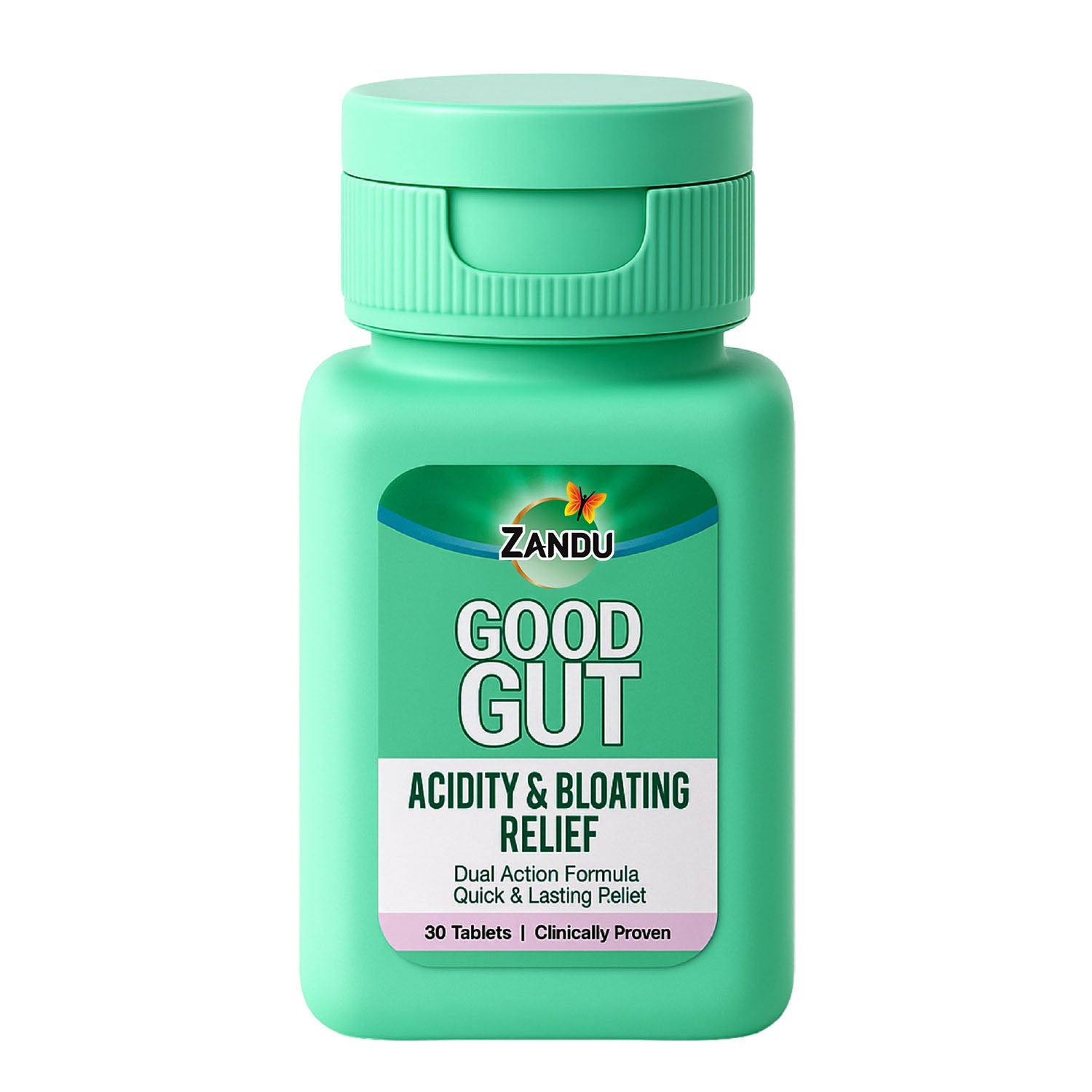
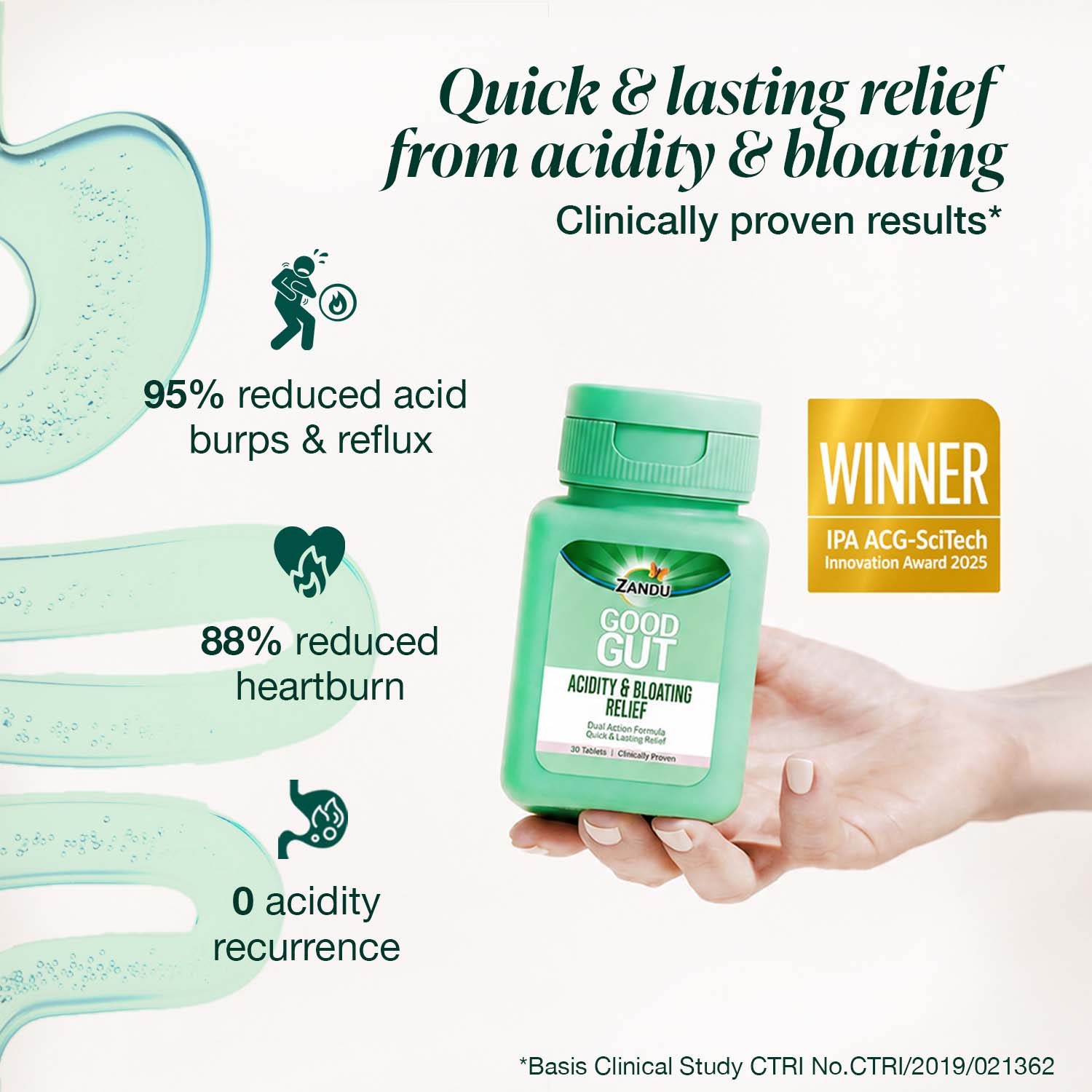
- Zandu Good Gut Acidity & Bloating Relief Tablets: For burning, sour burps and acidity after late dinners, spicy food, or tea and coffee.
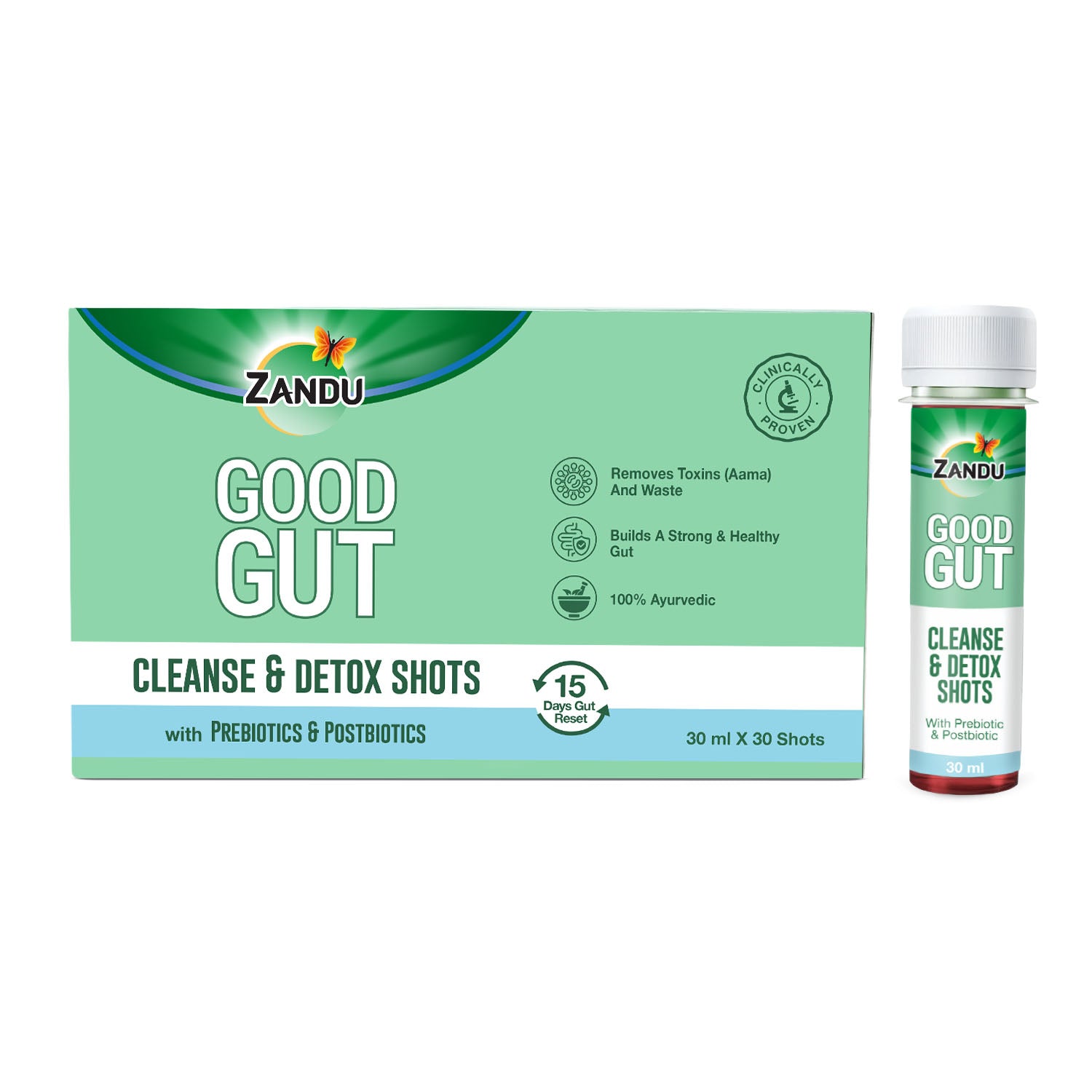
- Zandu Good Gut Cleanse & Detox Shots: For heaviness, bloating and gas that come from irregular meals, outside food or stress. Take 1 shot twice a day as a 45-day course. They are not meant for sudden, severe acidity or severe constipation.
Read the label before use. Check with your doctor if you take other medicines, are pregnant or have an ongoing health condition. Don't use any product instead of getting warning signs checked.
Conclusion
New indigestion after 40 is common and usually comes from normal ageing changes. Your stomach empties more slowly, the acid valve gets weaker, belly fat builds up, and you may be taking more medicines. Late dinners, less exercise and stress worsen it.
Most cases get better with smaller meals, an early dinner, regular exercise and short-term medicine. Don't ignore trouble swallowing, weight loss, vomiting, black stools, anaemia or symptoms that don't respond to treatment. A simple check-up can find the cause early and get you the right treatment.
References
These are the studies and sources used in this article.
- Ford AC, Marwaha A, Sood R, Moayyedi P. Global prevalence of, and risk factors for, uninvestigated dyspepsia: a meta-analysis. Gut. 2015. https://pubmed.ncbi.nlm.nih.gov/25147201/
- Barberio B, Mahadeva S, Black CJ, et al. Systematic review with meta-analysis: global prevalence of uninvestigated dyspepsia according to the Rome criteria. Alimentary Pharmacology & Therapeutics. 2020. https://pubmed.ncbi.nlm.nih.gov/32852839/
- Ohashi S, Maruno T, Fukuyama K, et al. Visceral fat obesity is the key risk factor for the development of reflux erosive esophagitis in 40-69-years subjects. Esophagus. 2021. https://pubmed.ncbi.nlm.nih.gov/34117973/
- Fujiwara Y, Machida A, Watanabe Y, et al. Association between dinner-to-bed time and gastro-esophageal reflux disease. American Journal of Gastroenterology. 2005. https://pubmed.ncbi.nlm.nih.gov/16393212/
- Yu C, Wang T, Gao Y, et al. Association between physical activity and risk of gastroesophageal reflux disease: a systematic review and meta-analysis. Journal of Sport and Health Science. 2024. https://pubmed.ncbi.nlm.nih.gov/38552714/
- Soenen S, Rayner CK, Horowitz M, Jones KL. Gastric emptying in the elderly. Clinics in Geriatric Medicine. 2015. https://pubmed.ncbi.nlm.nih.gov/26195094/
- Yamasaki T, Hemond C, Eisa M, et al. The changing epidemiology of gastroesophageal reflux disease: are patients getting younger? Journal of Neurogastroenterology and Motility. 2018. https://pubmed.ncbi.nlm.nih.gov/30347935/
- Oliveria SA, Christos PJ, Talley NJ, Dannenberg AJ. Heartburn risk factors, knowledge, and prevention strategies: a population-based survey of individuals with heartburn. Archives of Internal Medicine. 1999. https://pubmed.ncbi.nlm.nih.gov/10421282/
- Ley D, Saha S. Menopause and gastrointestinal health and disease. Nature Reviews Gastroenterology & Hepatology. 2025. https://pubmed.ncbi.nlm.nih.gov/40410564/
- Yu HX, Han CS, Xue JR, et al. Esophageal hiatal hernia: risk, diagnosis and management. Expert Review of Gastroenterology & Hepatology. 2018. https://pubmed.ncbi.nlm.nih.gov/29451037/
- Wang X, Yu W, Jiang G, et al. Global epidemiology of gallstones in the 21st century: a systematic review and meta-analysis. Clinical Gastroenterology and Hepatology. 2024. https://pubmed.ncbi.nlm.nih.gov/38382725/
- Vakil N, Moayyedi P, Fennerty MB, Talley NJ. Limited value of alarm features in the diagnosis of upper gastrointestinal malignancy: systematic review and meta-analysis. Gastroenterology. 2006. https://pubmed.ncbi.nlm.nih.gov/16890592/
- Moayyedi P, Lacy BE, Andrews CN, et al. ACG and CAG clinical guideline: management of dyspepsia. American Journal of Gastroenterology. 2017. https://pubmed.ncbi.nlm.nih.gov/28631728/
- Mayo Clinic Proceedings. 40-year-old woman presenting with heartburn. 2023. https://www.mayoclinicproceedings.org/article/S0025-6196(23)00364-6/fulltext
- Canadian Digestive Health Foundation. Why heartburn becomes more common with age. 2025. https://cdhf.ca/en/why-heartburn-becomes-more-common-with-age/
- Mount Elizabeth Hospitals. Ageing and eating. https://www.mountelizabeth.com.sg/health-plus/article/ageing-and-eating
- Shawl MD. 4 reasons acid reflux can worsen as you age. https://www.shawlmd.com/blog/4-reasons-acid-reflux-can-worsen-as-you-age
- Silver Touch Hospitals. Gut health after 40: what changes and what you can do. https://www.silvertouchhospitals.com/gut-health-after-40-what-changes-and-what-you-can-do/
- Zandu Care. Good Gut Acidity & Bloating Relief Tablets. https://usdtlegal.com/products/good-gut-acidity-bloating-relief-tablets
- Zandu Care. Good Gut Cleanse & Detox Shots. https://usdtlegal.com/products/zandu-good-gut-detox-shots
Written by

Zanducare
India’s trusted name in Ayurvedic wellness, offering time-tested solutions for today’s health and lifestyle needs. With formulations rooted in classical Ayurvedic texts and crafted using pure natural ingredients, we bring holistic care into your everyday routine.
Research by




Leave a comment
This site is protected by hCaptcha and the hCaptcha Privacy Policy and Terms of Service apply.