











How Long Does Digestion Take? A Timeline
Digestion usually takes 24 to 72 hours from the time you eat to the time you pass stool. Food spends about 2 to 4 hours in your stomach, 2 to 8 hours in your small intestine, and 10 hours to 2 days or more in your large intestine.
The exact time is different for everyone. A review in the journal Gut puts the typical whole-gut transit time for a healthy adult at about 28 hours, but it can stretch up to 5.5 days.
In a study of 863 healthy people who ate blue-dyed muffins and watched for blue stool, those with the hardest stools took over 5 days, while those with the softest stools took about 1 day.
Below is the full timeline, stage by stage, plus what makes your digestion faster or slower.
Digestion Timeline: Stage by Stage
Here is roughly how long food spends in each part of your gut.
|
Stage |
Time food spends there |
What happens? |
|
Mouth |
Seconds to a minute |
Chewing and saliva start breaking down starch. |
|
Oesophagus (food pipe) |
About 10 seconds |
Muscle waves push food to the stomach. |
|
Stomach |
2 to 4 hours (up to 6) |
Acid and enzymes turn food into a thick liquid called chyme. |
|
Small intestine |
2 to 8 hours |
Most nutrients and water are absorbed into the blood. |
|
Large intestine (colon) |
10 hours to several days (about 35 hours on average) |
Water is pulled out and waste becomes stool. |
|
Rectum |
Until you go to the toilet |
Stool is stored, then passed. |
|
Total |
24 to 72 hours |
How Long Does Food Stay in Your Stomach?
Most meals stay in your stomach for 2 to 4 hours. A light, simple meal can leave in under an hour, while a heavy, fatty meal can sit there for 4 to 6 hours.
What Happens to Food in The Stomach?
Your stomach muscles churn food and mix it with acid and enzymes. Protein starts breaking down here. Bit by bit, the food turns into a soupy mix called chyme. The stomach then lets small amounts of chyme pass into the small intestine at a time, not all at once.
Why Do Some Meals Stay Longer in the Stomach?
How long a meal stays in your stomach depends on three things: what the meal is made of, how thick or solid it is, and your body. A normal mixed meal leaves the stomach in about 2 to 4 hours. But fat, protein, and fibre act like a brake, slowing your stomach down so you stay full for longer.
Liquids pass through faster than solids, and age, sex, and hormones also change the pace. Simply put, the heavier the food, meaning the more protein or fat it has, the longer it takes to digest
- Plain rice, pasta, or simple sugars: 30 to 60 minutes
- Eggs with avocado or peanut butter on toast: 2 to 4 hours
- Add bacon or fried food: even longer
Sex matters too. A study of 32 healthy adults found that men’s stomachs emptied faster than women’s.
Why Does a Late, Heavy Dinner Cause Acidity?
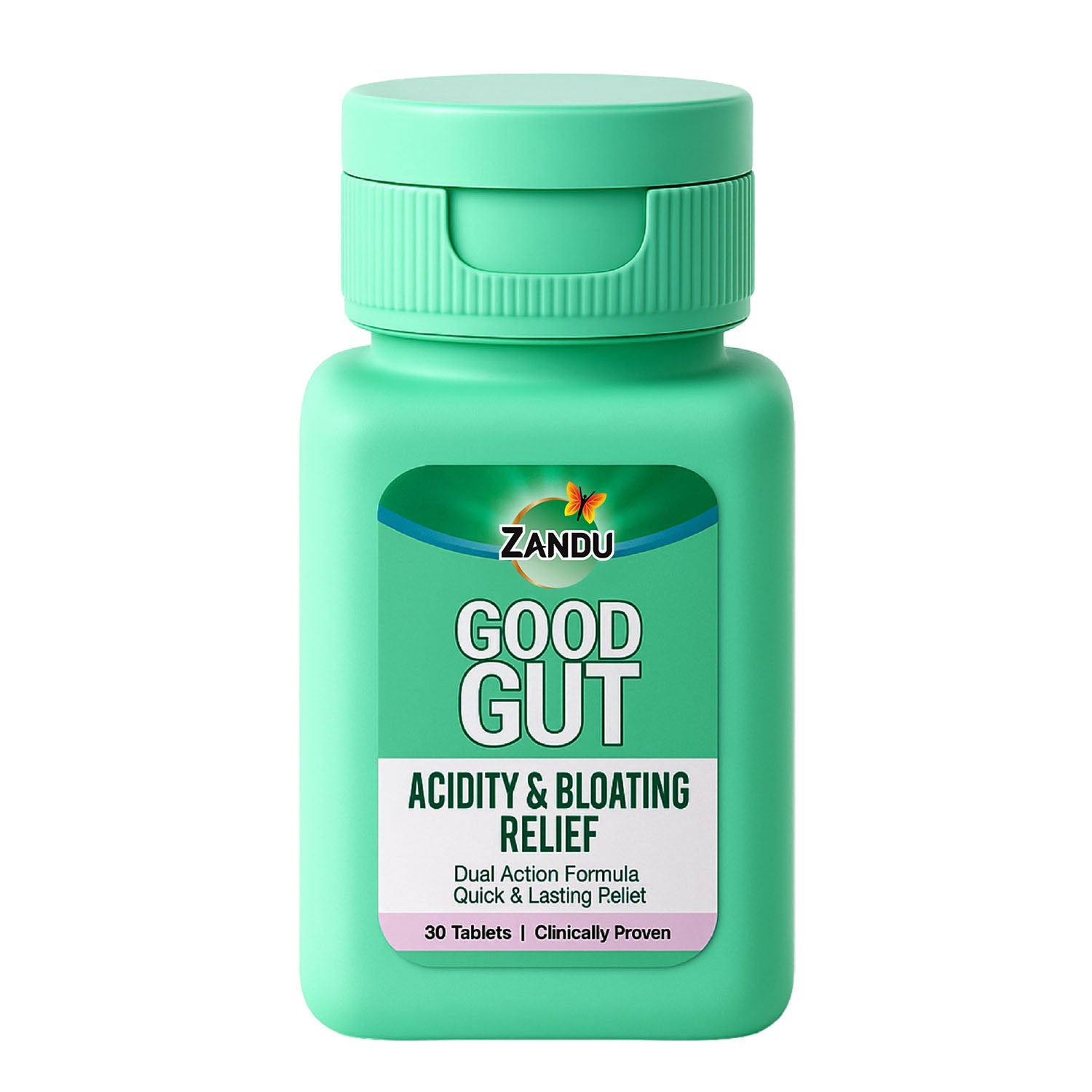
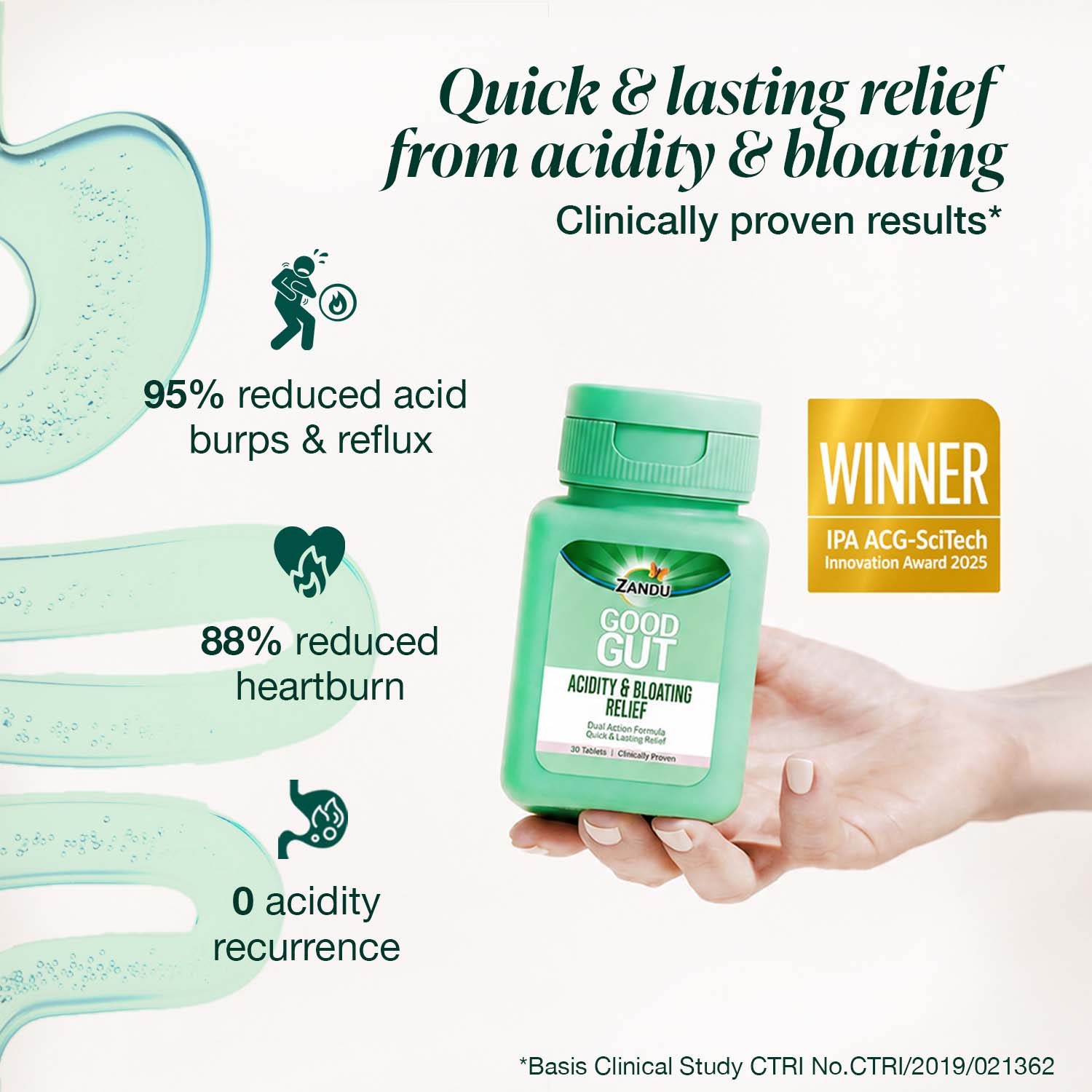
When you lie down with a full stomach, acid can travel up into the food pipe and cause burning, sour burps, and broken sleep. Finishing dinner 2 to 3 hours before bed gives your stomach time to empty. If burning after late or spicy meals is a regular problem, Zandu Good Gut Acidity & Bloating Relief is made for quick relief and fewer repeat episodes.
How Long Does Food Take in the Small Intestine?
Food spends about 2 to 8 hours in the small intestine, with a typical time of around 5 hours.
This is where most of the real digestion happens. The small intestine is about 20 feet long. Juices from the pancreas break down carbs, fats, and proteins, and bile from the gallbladder breaks up fat. Vitamins, minerals, nutrients, and water then pass through the gut wall into your blood.
How Long Does Food Take in the Large Intestine?
The large intestine, or colon, is the slowest part of the trip. Food usually spends 10 hours to several days here.
In a study of 73 healthy adults, waste took an average of 35 hours to pass through the colon. That time was split almost evenly between the right colon (11 hours), the left colon (11 hours), and the last part, the rectum and sigmoid colon (12 hours). Men moved waste through faster than women.
What Does the Colon Do?
The colon pulls water and salts out of the leftover waste. Gut bacteria break down some of the fibre that your body cannot digest by itself. What remains becomes stool, which is stored in the rectum until you go to the toilet.
The longer waste stays in the colon, the more water is removed, and the harder the stool gets. That is why slow colon transit and constipation often go together.
Food Digestion Time by Type of Food

What you eat changes how fast it moves. These times are for how long food takes to leave the stomach, which is where the most significant differences show up.
|
Food or drink |
Examples |
Time to leave the stomach |
|
Plain water |
Water on an empty stomach |
10 to 20 minutes |
|
Simple liquids |
Clear juice, tea, soda |
20 to 40 minutes |
|
Thick liquids |
Smoothies, protein shakes, soups |
40 to 60 minutes |
|
Simple carbs |
White rice, white bread, pasta, sweets |
30 to 60 minutes |
|
Fiber-rich carbs |
Oats, dal, beans, vegetables, whole grains |
Longer than simple carbs |
|
Protein |
Eggs, chicken, fish, paneer, meat |
2 to 4 hours |
|
Fatty or fried food |
Fried snacks, cheese, rich desserts, bacon |
4 hours or more |
Which Foods Digest Fastest?
Water, clear drinks, and simple sugars move fastest. Sugary, processed foods like sweets are digested within hours, which is why they leave you hungry again soon.
Which Foods Take the Longest to Digest?
Fatty and fried foods are the slowest, followed by meat, fish, and other high-protein foods. Their molecules are bigger and more complex, so the stomach holds them longer.
Does Fibre Speed Up or Slow Down Digestion?
Both, depending on the type:
- Soluble fibre (oats, apples) absorbs water and slows the rate at which food leaves the stomach. This keeps you full longer.
- Insoluble fibre (wheat bran, leafy greens, whole grains) adds bulk to stool and speeds it through the colon.
Research backs these findings up. A review of transit studies found that wheat bran consistently shortens whole-gut transit time, and coarse bran works better than fine bran.
What Makes Digestion Faster or Slower?
Your digestion time depends on your body, your habits, and your health. Here is what the research shows.
Are Women Slower Than Men?
Yes, on average. Researchers found that men move waste through the colon faster than women. A later study of 32 healthy adults also found faster colon transit and faster stomach emptying in men. The menstrual cycle had only a small effect.
Does Digestion Slow Down With Age?
Yes, mainly in the colon. A study comparing healthy adults with an average age of 81 to adults with an average age of 24 found that the older group moved waste through the colon much more slowly.
Stomach emptying and small intestine transit times were similar in both groups. This phenomenon is one reason constipation is more common in older people.
Does Exercise Speed up Digestion?
Yes, and by a lot. In a small study of 10 healthy adults, one hour a day of moderate jogging cut whole-gut transit time from 51 hours to 34 hours. One hour of cycling cut it to about 37 hours.
Can Stress Change Digestion Time?

Yes, stress can make a clear difference to how fast you digest food. When you feel stressed, your body switches into “fight or flight” mode and pulls energy away from the gut, since digestion is not needed to survive the moment.
Depending on your body and whether the stress is sudden or long-lasting, this can slow digestion down and cause bloating or constipation, or speed it up and cause loose motions.
Does Sleep Affect Digestion?
Yes, and it works both ways. Your gut slows down at night, so a heavy meal close to bedtime sits in the stomach longer and can bring on reflux or bloating. Poor sleep, in turn, throws off your hunger hormones.
In one study, just two nights of about 4 hours of sleep raised hunger by 24% and sparked cravings for sweets and starchy food. People with a more varied mix of gut bacteria also tend to sleep longer and wake up less. Eating dinner 2 to 3 hours before bed and sleeping 7 to 8 hours helps both.
Other Things That Change Digestion Time
- Water intake: Too little water makes stool hard and slow to pass
- Genes and gut bacteria: Some people are simply faster or slower by nature
- Medicines: Some antidepressants, diabetes medicines, painkillers, birth control pills, and anticholinergic drugs can slow digestion
- Health conditions: Diabetes, an underactive thyroid, IBS, and inflammatory bowel disease can all change digestion speed
How to Check Your Own Digestion Time
You can get a rough idea at home with the "blue poo" test used in the 863-person study above:
- Eat a food with strong blue food colouring, such as a blue muffin, as part of a normal meal.
- Note the time you ate it.
- Note the time you first see blue-green stool.
- The gap between the two is your gut transit time.
In healthy adults, whole-gut transit can range from about 10 to 73 hours, so a wide spread is normal. The same study found that longer transit times were associated with more belly fat and bigger blood sugar and fat spikes after meals. Doctors use more exact tests, such as marker X-rays or a swallowed wireless capsule, if they need precise numbers.
How to Keep Your Digestion on Track
These simple habits help food move at a healthy pace:
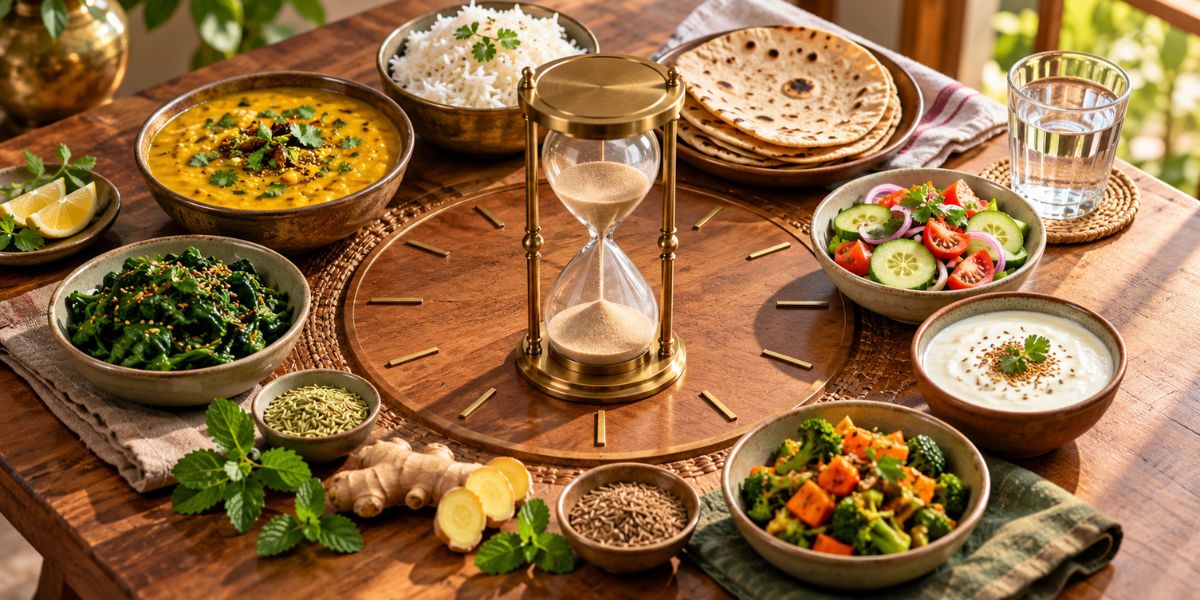
- Eat at least 30 grams of fibre a day from whole grains, dal, oats, fruits, and vegetables
- Drink enough water throughout the day
- Eat 4 to 5 smaller meals instead of 2 or 3 heavy ones
- Choose lean protein like fish, chicken, eggs, paneer, or tofu
- Add curd, buttermilk, or other probiotic foods
- Walk, jog, or exercise every day
- Cut down on fried, greasy, and ultra-processed food
- Keep dinner light and finish it 2 to 3 hours before bed
- Manage stress with yoga, breathing, or a short walk
- Quit smoking and keep a healthy weight
Irregular meals, outside food, and late nights can leave your gut feeling heavy, gassy, and slow, especially after a weekend of eating out. For that daily "my stomach feels off" kind of discomfort, Zandu Good Gut Cleanse & Detox Shots are made to help reset your gut.
When Is Slow or Fast Digestion a Problem?
A digestion time outside the usual range is not a worry by itself. It matters when it comes with symptoms that keep coming back.
Signs Your Digestion is Too Slow
- Going 2 or more days without a bowel movement
- Hard, dry stool or straining on the toilet
- Feeling you have not fully emptied
- Bloating or fullness long after eating, which can point to slow stomach emptying (gastroparesis), often linked to diabetes
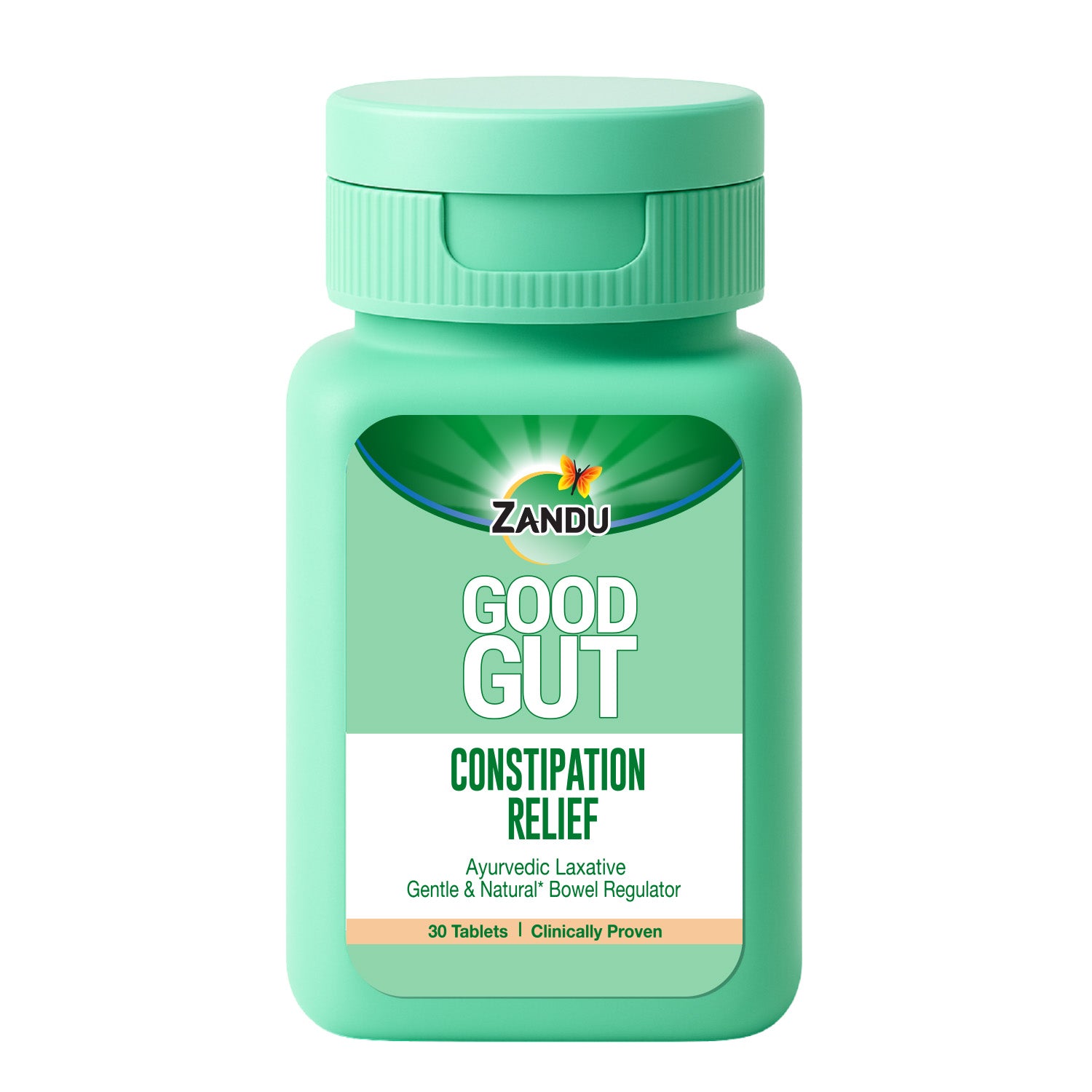
For occasional constipation, increasing insoluble fibre, drinking more water, and daily movement usually help. For hard stools and irregular motions, Zandu Good Gut Constipation Relief tablets are made to give smooth, predictable relief.
Signs Your Digestion is Too Fast
- Loose or watery stools, often within a day of eating
- Urgent trips to the toilet after meals
- Food that looks undigested in stool
Inflammatory bowel disease (Crohn's disease and ulcerative colitis) often speeds up transit, while IBS can make it either too fast or too slow.
When to see an Ayurvedic Doctor
See a doctor if you have long-lasting belly pain, bloating, constipation, or diarrhoea. Go sooner if you notice blood in your stool, black stool, weight loss without trying, repeated vomiting, or trouble swallowing.
Conclusion
Most food takes 24 to 72 hours to pass through your body. It spends 2 to 4 hours in the stomach, 2 to 8 hours in the small intestine, and the longest stretch, often a day or two, in the colon.
Your time depends on what you eat, your age, whether you are a man or woman, how active you are, and your stress levels. Fatty and fried meals slow the stomach down, while fibre, water, and daily exercise help keep things moving.
If your digestion often feels too slow, too fast, or uncomfortable, small changes to your meals and routine usually help. If symptoms do not settle, check with a doctor.
Sources
This article draws on peer-reviewed studies and trusted health resources on gut transit time and digestion.
- Procházková N, et al. Advancing human gut microbiota research by considering gut transit time. Gut, 2023;72(1):180–191. https://gut.bmj.com/content/72/1/180
- Asnicar F, et al. Blue poo: impact of gut transit time on the gut microbiome using a novel marker. Gut, 2021;70(9):1665–1674. https://pmc.ncbi.nlm.nih.gov/articles/PMC8349893/
- Degen LP, Phillips SF. Variability of gastrointestinal transit in healthy women and men. Gut, 1996;39(2):299–305. https://gut.bmj.com/content/39/2/299
- Metcalf AM, et al. Simplified assessment of segmental colonic transit. Gastroenterology, 1987;92(1):40–47. https://pubmed.ncbi.nlm.nih.gov/3023168/
- Madsen JL, Graff J. Effects of ageing on gastrointestinal motor function. Age and Ageing, 2004;33(2):154–159. https://doi.org/10.1093/ageing/afh040
- Oettlé GJ. Effect of moderate exercise on bowel habit. Gut, 1991;32(8):941–944. https://gut.bmj.com/content/32/8/941
- Spiegel K, Tasali E, Penev P, Van Cauter E. Sleep curtailment in healthy young men is associated with decreased leptin levels, elevated ghrelin levels, and increased hunger and appetite. Annals of Internal Medicine, 2004;141(11):846–850. https://pubmed.ncbi.nlm.nih.gov/15583226/
- Smith RP, et al. Gut microbiome diversity is associated with sleep physiology in humans. PLoS One, 2019;14(10):e0222394. https://doi.org/10.1371/journal.pone.0222394
- Healthline. How long does it take to digest food? https://www.healthline.com/health/how-long-does-it-take-to-digest-food
- Cleveland Clinic. How long does it take to digest food? https://health.clevelandclinic.org/how-long-does-it-take-to-digest-food
Written by

Zanducare
India’s trusted name in Ayurvedic wellness, offering time-tested solutions for today’s health and lifestyle needs. With formulations rooted in classical Ayurvedic texts and crafted using pure natural ingredients, we bring holistic care into your everyday routine.
Research by



Leave a comment
This site is protected by hCaptcha and the hCaptcha Privacy Policy and Terms of Service apply.